
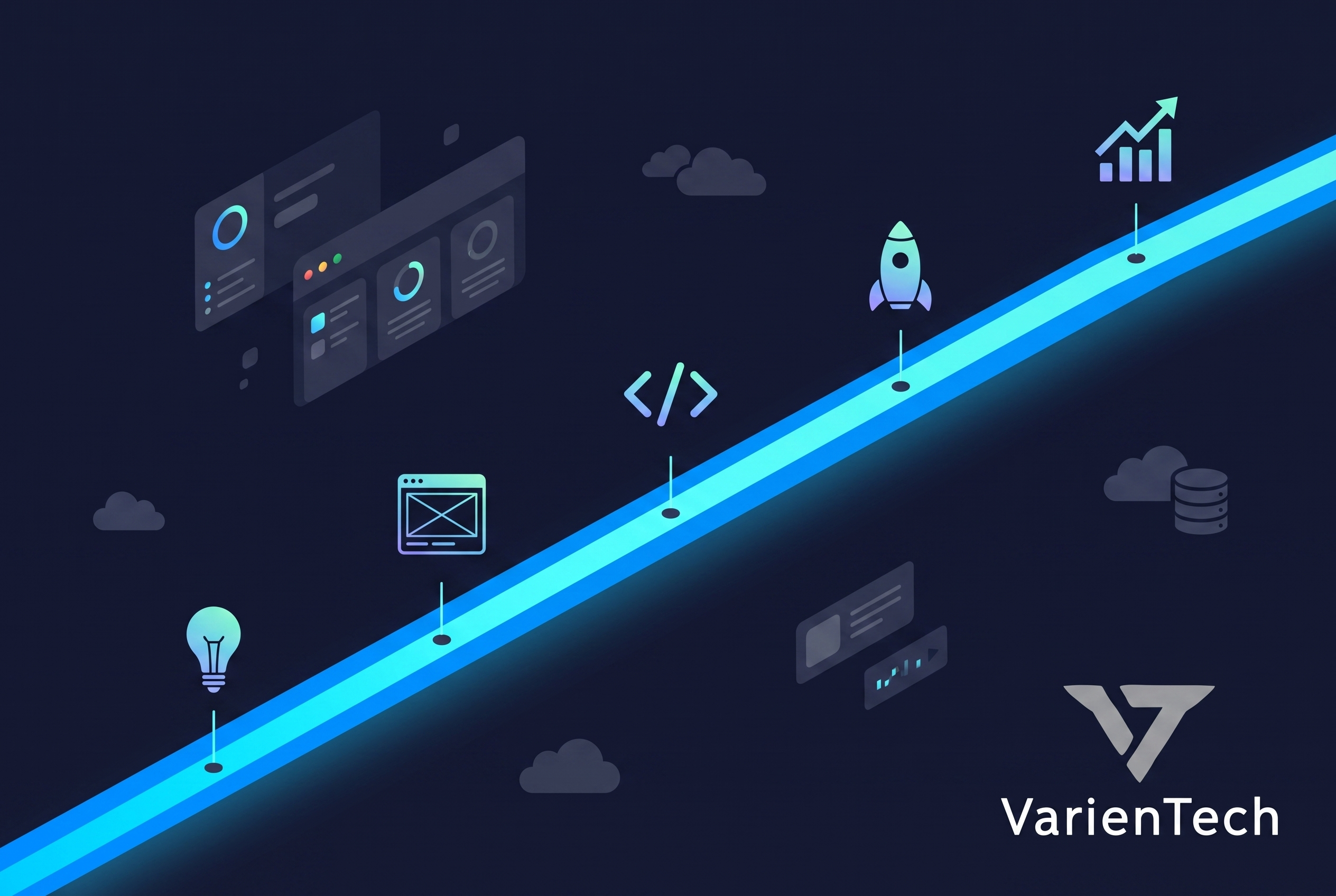
A clear SaaS development roadmap is the difference between a product that reaches paying customers in six months and one that is still “nearly ready” two years later. Most early-stage teams do not fail because they cannot write software. They fail because they build in the wrong order — infrastructure before validation, features before pricing, scale before retention. This guide lays out the five phases in sequence, what belongs in each one, what it realistically costs, and the decisions that quietly determine whether the thing you ship can grow.
What a SaaS Development Roadmap Actually Is
A SaaS development roadmap is not a Gantt chart of features. It is an ordered sequence of decisions, each one designed to remove a specific risk before you spend money on the next stage. Phase one removes market risk. Phase two removes scope risk. Phase three removes technical risk. Phases four and five remove commercial and operational risk.
The ordering matters because software costs compound. A wrong assumption caught in a customer interview costs an afternoon. The same assumption caught after launch costs a rebuild. Everything below is arranged so that the cheapest questions get answered first.
The market rewards teams that get this right. Worldwide software spending is forecast to reach $1.468 trillion in 2026, growing 15.5% year on year according to Gartner — but the same demand is why every category now has incumbents. Speed to a validated, differentiated product is the advantage available to a startup; breadth is not.
Phase 1: Discovery and Validation (Weeks 1–3)
The goal of phase one is a written, falsifiable statement of who has the problem, how they solve it today, and what they would pay to stop. Nothing is built yet.
What to do
- Run 10–15 problem interviews with people who match your buyer profile. Ask about their last real experience with the problem, not about your idea.
- Map the current workaround. Spreadsheets, WhatsApp groups and manual admin are your true competitors far more often than a named SaaS product.
- Size the willingness to pay. If nobody currently spends money or meaningful hours on this problem, a subscription will be a hard sell.
- Define one primary job. Write it as a sentence with a measurable outcome.
Exit criteria
You can name the user, the job, the current workaround, and a plausible price point. If you cannot, repeat the phase rather than progressing — this is the cheapest week you will ever spend.
Phase 2: Product Definition and Architecture (Weeks 3–6)
Now you convert the validated problem into a scoped first release and a technical foundation that will not need replacing at 10,000 users.
Scope the first release ruthlessly
One user type, one end-to-end workflow, production quality. This is the point where most roadmaps quietly inflate, so decide explicitly what is not in version one and write it down. Our breakdown of MVP vs full product covers how to draw that line without shipping something too thin to judge fairly.
Choose architecture you will not regret
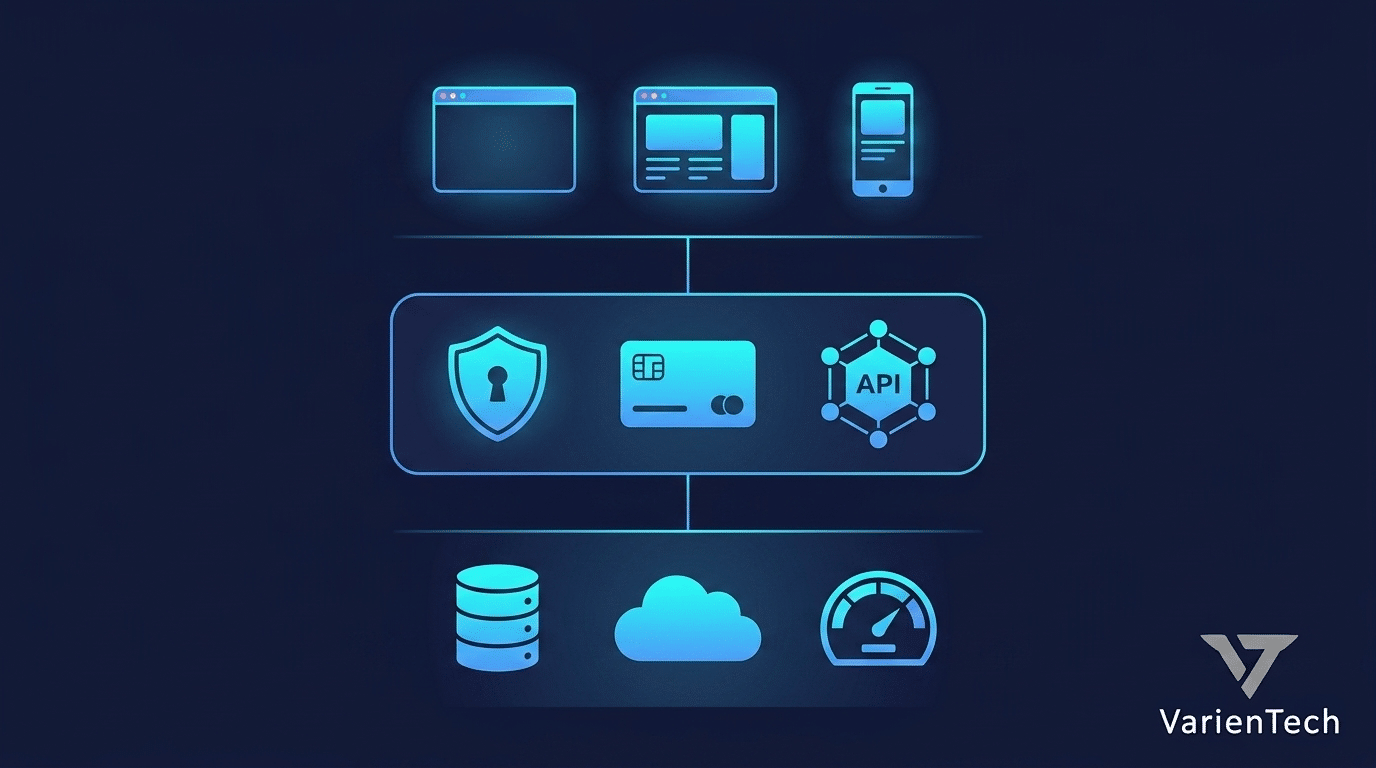
- Multi-tenancy model. Shared schema with a tenant ID is right for the overwhelming majority of startups. Database-per-tenant is an enterprise and compliance decision, not a default.
- A well-structured monolith. It will carry you comfortably past your first serious revenue. Microservices at seed stage buy you operational overhead and nothing else.
- Managed infrastructure. Managed Postgres, managed queues, managed auth. Every hour spent on self-hosted infrastructure is an hour not spent on the product.
- Tenant isolation and audit logging from day one. Retrofitting these is genuinely painful; building them in is a few days.
Exit criteria
A signed-off scope document, wireframes for the core workflow, a chosen stack, and a build estimate you would defend to an investor.
Phase 3: Build the MVP (Weeks 6–18)
Twelve weeks is a realistic window for a focused, production-grade first release with a small team. Two-week sprints, a demoable increment at the end of each one.
What ships in version one
- Authentication, roles and tenant separation
- The core workflow, complete and reliable end to end
- Subscription billing, even if only one plan exists
- Product analytics, error tracking and an in-app feedback channel
- Automated tests on the paths that touch money and data
- CI/CD, so shipping a fix takes minutes rather than a scheduled release
What does not
Admin dashboards for problems you do not yet have, integrations nobody has requested by name, a mobile app, multi-language support, and configurable everything. Each of these is a phase-five decision that feels like a phase-three requirement.
If you are handing the build to an external partner, scope discipline matters even more — see the common mistakes companies make when outsourcing software development before you sign anything.
Phase 4: Beta, Pricing and Launch (Weeks 18–24)
A closed beta with 10–30 real users is the last cheap chance to be wrong. Watch what they do rather than asking whether they like it.
Pricing
Pick a value metric that grows with the customer — seats, records processed, transactions — and start with two or three simple tiers. Charge from day one of the beta if you can. Free pilots produce enthusiasm and no information about willingness to pay.
Launch readiness checklist
- Onboarding that gets a new account to first value without a call
- Documented uptime, backup and restore procedures — tested, not assumed
- A support channel with a named owner and a response-time commitment
- Security basics: encryption in transit and at rest, dependency scanning, sensible rate limits
- Instrumented activation, retention and churn dashboards from the first paying customer
Phase 5: Scale (Month 6 Onwards)
Scaling is triggered by evidence, not by the calendar. Move when retention holds past the novelty period, when customers name specific missing features rather than asking what the product is for, and when you are losing identified deals to a known gap.
At that point the roadmap turns outward: enterprise requirements such as SSO and role-based access, the two or three integrations that keep appearing in sales calls, performance work driven by real traffic patterns, and compliance certification if your buyers require it. This is also where a specialist SaaS development agency earns its keep, because the failure mode shifts from “can we build it” to “can we build it without destabilising what already works.”
SaaS Development Roadmap Timeline and Budget at a Glance
| Phase | Typical duration | Team | Primary risk removed |
|---|---|---|---|
| 1. Discovery & validation | 2–3 weeks | Founder + product | Market risk |
| 2. Definition & architecture | 2–3 weeks | Product + tech lead + designer | Scope risk |
| 3. MVP build | 10–12 weeks | 2–4 engineers + QA | Technical risk |
| 4. Beta, pricing & launch | 4–6 weeks | Full team + first customers | Commercial risk |
| 5. Scale | Ongoing | Growing team | Operational risk |
End to end, a disciplined first release lands in roughly five to six months. Timelines stretch when phase one is skipped, because the scope never stops moving.
Mistakes That Derail a SaaS Development Roadmap
- Building infrastructure for scale you do not have. Kubernetes and microservices before product-market fit are a tax paid in engineering hours.
- Treating pricing as a launch-day decision. Pricing shapes the product. Decide the value metric during phase two.
- No analytics at launch. Shipping without instrumentation means the next roadmap is guesswork again.
- Saying yes to the first enterprise prospect. One large logo can quietly redirect two quarters of the roadmap toward a single customer’s requirements.
- Confusing activity with progress. Sprints completed is not a metric. Activated accounts and week-four retention are.
Frequently Asked Questions
How long does it take to build a SaaS product?
A focused, production-grade first release typically takes five to six months end to end, of which about twelve weeks is engineering. Broader platforms with compliance or enterprise requirements run nine to eighteen months.
What should a SaaS development roadmap include?
Five ordered phases — discovery and validation, product definition and architecture, MVP build, beta and launch, and scale — each with explicit exit criteria, rather than a list of features with dates attached.
How much does it cost to build a SaaS MVP?
Most startups should budget for a two-to-four person team over ten to twelve weeks, plus a few weeks of product and design either side. Regional rates vary widely, but scope discipline affects the total far more than the hourly rate does.
Should a startup build a mobile app in version one?
Usually not. A responsive web application validates the same demand for a fraction of the cost. Add native apps once usage data shows where mobile actually matters.
When should a SaaS startup move from MVP to scaling?
When retention is stable after the novelty period, unit economics work at small volume, and lost deals point to a specific named gap. Absent those signals, more features will not help.
The Bottom Line
A good SaaS development roadmap is a risk-retirement plan disguised as a schedule. Validate before you scope, scope before you build, build narrow but properly, price early, and scale only when the data tells you to. Teams that follow that order ship sooner and rebuild less.
At VarienTech we help founders turn a validated idea into a scoped, production-ready SaaS platform — and grow it without a rewrite. Talk to our team about what your first release should include.

One Response